















What to Wear to the Gym
What to Wear to the Gym
Knowing what to wear to the gym shouldn’t require a degree in activewear. The right outfit is really about a few simple things: comfort, movement, breathability and footwear that suits what you’re actually doing. Whether you’re lifting weights, running on the treadmill, joining a HIIT class or stretching it out on a mat, this guide breaks down what works, what to avoid and how to put together a reliable gym outfit – all without overthinking it.
For more training essentials, explore Reebok’s men’s gym and training collection or Reebok’s women’s gym and training collection.
Gym Outfit Essentials, Explained
The best gym outfits start with the basics:
1) Trainers that match your workout
2) A top that lets you move freely
3) Bottoms that stay put
4) For women, a sports bra with the right level of support.
From there, it's about adjusting the pieces to suit the session ahead. Read on as we break down each of these four components in more detail.
Women’s Gym Trainers
Your trainers should match your workout, not just your outfit.
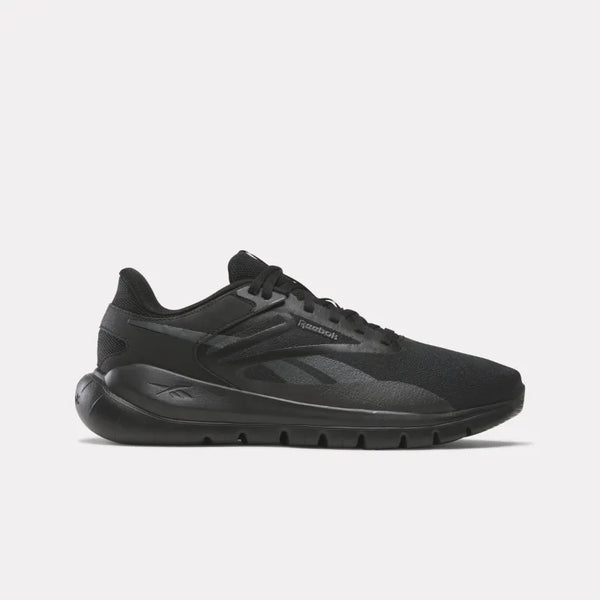
· For cardio days: look for cushioned running trainers that feel comfortable and supportive over repeated impact (i.e. your heels hitting the treadmill or the ground).
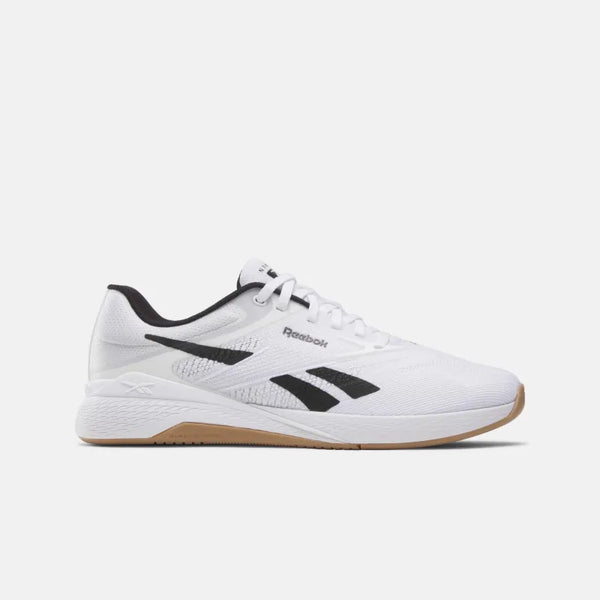
· If you’re switching between exercises, jumping around and moving in different directions: a cross-training shoe with good grip and stability is a better fit.
· For strength training: look for a flatter, more stable sole that helps you feel grounded when lifting.
You don’t necessarily need a different pair for every type of workout, but if you regularly switch between running, HIIT and weights, having footwear designed for each can make a noticeable difference. Explore the Reebok women’s gym & training shoes collection, or our full range of women’s running shoes for an option that suits you.
Men’s Gym Trainers
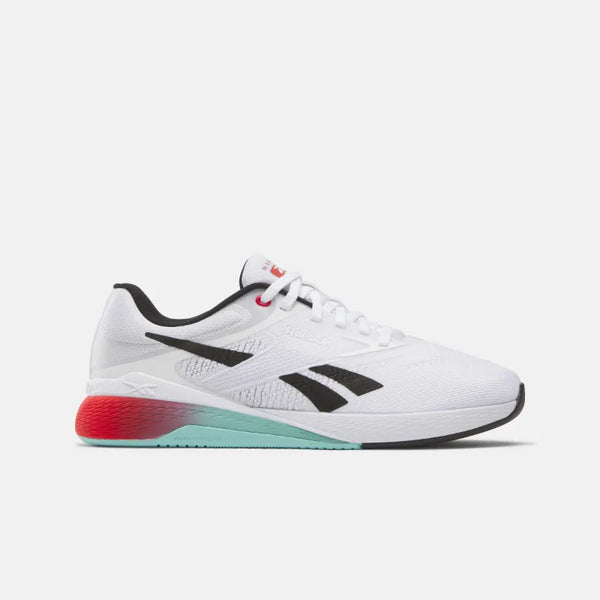
The same principle applies to men’s gym trainers. Running shoes are a natural choice for treadmill sessions and cardio, where cushioning and comfort matter. For HIIT, circuits and functional training, cross-training shoes offer the grip and flexibility needed for quick changes of direction. If strength training is your priority, a flatter, stable trainer can provide a more solid base for lifting.
The takeaway? There’s no single “gym shoe” that’s perfect for everything. Think about how you train first, then choose accordingly.
Women’s Gym Tops
Your gym top should make movement easy, not something you have to think about mid-set. Fitted performance tops are useful for strength training and layering, as they stay relatively close to the body without getting in the way.
For cardio and HIIT, a lightweight tank can help keep you cool when your heart rate rises. Prefer a little more coverage or a relaxed feel? An oversized tee works well for lower-intensity sessions or anyone who prioritises comfort over a close fit.
Men’s Gym Tops
For guys, the choice is similarly straightforward. A fitted performance t-shirt works well for strength training because it will stay out of the way without restricting your movement. Sleeveless tanks, on the other hand, are useful for cardio and conditioning when ventilation becomes more important, and a relaxed-fit gym tee is a good all-rounder for general or hybrid training.
If you’re doing a bit of everything, prioritise something made from a lightweight fabric, with a fit that gives you room to move without becoming cumbersome.
Women’s Sport Bras
Sports bras aren't just another layer – they’re an important part of choosing what to wear to the gym, and the right level of support really depends on the workout.
Low-support bras can work well for yoga and Pilates, where there’s less impact. Medium support is a good choice for strength training and general gym sessions, while high-support bras are better suited to running, HIIT and other high-impact workouts.
Focus on support and comfort rather than simply how a bra looks. When you’re trying it on, move around and replicate some of the motions you think you might do during your workout.
An uncomfortable sports bra, or one that you constantly have to adjust during a workout, isn’t doing its job.
Women’s Gym Bottoms
Shorts, joggers and leggings are the most common bottoms for women, and your best choice will depend on personal preference and your workout.
High-waisted leggings are a versatile option for everything from yoga and Pilates to strength training, offering comfortable coverage that stays in place as you move. Look for squat-proof, stretchy fabrics that won't become sheer during deep bends or stretches, plus a supportive waistband that doesn't dig in.
For higher-intensity workouts or warmer days, shorts offer greater freedom and breathability, while joggers are a comfortable choice for warm-ups, cooler sessions or lower-impact workouts.
No matter what type of bottom you choose, pockets are another useful detail, particularly for runs, walks or gym sessions when you need somewhere to keep your phone.
Men’s Gym Bottoms
Shorts, joggers or a hybrid pair? What you choose comes down to how much you’re moving and how warm you tend to get.
Lightweight training shorts are ideal for cardio and HIIT, particularly when breathability is a priority. Stretch joggers work well for strength training, warm-ups and cooler gyms, while hybrid or 2-in-1 shorts offer a combination of support, coverage and freedom of movement for longer or more dynamic sessions.
How to Choose Gym Clothes Based on Your Workout
There’s no single answer to the question of what you should wear to the gym. That’s why your workout is the best place to start.
What to Wear For Strength Training
For lifting, you want stability and unrestricted movement. Choose a fitted or comfortably loose top, flexible bottoms and stable footwear that gives you a solid connection with the floor.
Avoid anything so oversized that it catches on equipment, or bottoms that restrict movement when you squat, lunge or hinge.
Cardio Workouts
Running, cycling and other cardio sessions can get sweaty fast, so prioritise lightweight, breathable and sweat-wicking clothing. A supportive sports bra, lightweight top and cushioned trainers make a reliable combination for higher-impact cardio.
If you tend to overheat, a tank or sleeveless top can also help keep things comfortable.
Yoga & Pilates Workouts
This is where stretch and softness matter most. Look for flexible leggings or shorts and lightweight tops that move with you rather than digging in or riding up.
Low-impact support is generally enough for yoga and Pilates, and trainers aren't always necessary, depending on the class you’re taking and studio rules. Grip socks might be required if you’re using Pilates equipment and are generally also useful for mat-based workouts.
HIIT & Circuit Training
HIIT is all about quick transitions, so your clothes need to keep up. Choose breathable fabrics, secure-fitting pieces and footwear with enough grip and support for jumping, sprinting and changing direction.
Avoid anything that needs constant adjustment. When you're moving from burpees to squats to sprints, the last thing you want to think about is your t-shirt.
The Best Fabrics and Materials for Gym Wear
Not all gym clothes can be treated equally: the fabric something is made from can make a surprisingly big difference when it comes to comfort and performance during a workout.
Cotton is soft and comfortable, and many people tend to choose it for its natural origins, but a 100% cotton top will absorb sweat rather than move it away from your skin. That can make it feel heavy and damp during a long or intense workout. For lighter sessions, though, a cotton tee can still be perfectly comfortable.
Performance materials such as nylon blends with elastane, on the other hand, are designed to move moisture away from the skin and dry quickly, making them particularly useful for sweaty, high-intensity sessions. Stretch fabrics also allow you to move freely without feeling restricted.
What Not to Wear to the Gym
There aren’t exactly faux pas when it comes to gym clothing: unless your gym has a specific dress code, no security guard is going to turn you away at the door if you turn up in the ‘wrong’ clothes. That said, there are some mistakes you can make when getting dressed for the gym – the biggest one being wearing something that works against your workout.
For instance, these may be obvious, but you’ll want to avoid the following. Some make it harder to work out, while others are simply wildly impractical:
· Denim jeans or shorts
· Office attire (such as a button-down shirt)
· Flip flops or pool slides
· Heavy cotton hoodies for intense session
· Loose jewellery
· Clothes with zips, hooks or loops that can catch on equipment
In addition, shoes without enough grip or stability can make certain exercises harder. Heavy, non-breathable fabrics can leave you overheated. And clothing that’s too tight can restrict movement, while very loose pieces can catch on equipment or get in the way.
You don’t need a head-to-toe technical outfit for every gym visit. Just make sure what you’re wearing allows you to move comfortably and suits the session.
Common Gym Outfit Mistakes and How to Fix Them
Choosing the wrong footwear for the workout type
Wearing the same generic trainers for every workout is the easiest, but different activities place different demands on your feet.
The fix: Match your footwear to the session. Choose cushioned trainers for running and cardio, cross-trainers for mixed workouts and stable, flatter footwear for lifting.
Wearing overly loose or overly tight clothing
Too much fabric can get in the way, particularly around gym equipment, while clothing that’s too tight can restrict your range of motion and become uncomfortable as you move.
The fix: Look for a fit that feels secure without feeling restrictive. You should be able to squat, stretch and reach without adjusting your clothes constantly.
Overdressing and overheating during workouts
A cold walk to the gym doesn’t necessarily mean you need three layers once you're inside. Heavy fabrics and too many layers can quickly leave you hot and uncomfortable.
The fix: Dress for the workout, not the temperature outside. Lightweight layers that can easily be removed are your friend.
Choosing the Right Gym Outfit with Reebok
Ultimately, the best gym outfit is one that lets you focus on your workout rather than what you’re wearing. Start with the activity, then think about comfort, movement, support and temperature. Choose footwear that matches the workout, fabrics that work with your intensity and fits that let you move freely. Once you’ve got that sorted, you’ll feel comfortable, confident, and ready for anything.
From training shoes to performance tops and workout essentials, Reebok has options to help you build a gym kit that works for the way you train.
 Reebok x Full Circle Berlin with DeadHYPE
Full Circle Berlin: Born Classic. Made Your Own.
What happens when a Classic gets passed on to a new generation? It gets reworked, customised, worn differently and given a story of its own.
What is Reebok Full Circle?
That reimagining is the idea behind Reebok Full Circle, a community-led cultural hub celebrating the people, movements and creativity that have kept Reebok Classics in the mix for more than four decades.
Following its launch at The Vinyl Factory in London earlier this year, Reebok Full Circle touched down in Berlin on 10 October, continuing a tradition of celebrating creativity and innovation in the city and bringing together local creatives, hands-on workshops, archive icons, music and contemporary style for a day built around making Classics your own.
In partnership with Berlin creative collective deadHYPE and Zalando, the event built on Reebok’s Born Classic. Worn For Life. platform, creating a space to connect, collaborate and get creative, with plenty of opportunities to put a personal spin on the Classics.
Made to be Reimagined
At the heart of Full Circle Berlin were three creative workshops, giving visitors the chance to get hands-on with Reebok Classics.
The workshops were curated with deadHYPE, a Berlin-based creative collective known for bringing together different corners of the city’s music, fashion, art and design communities. Its approach is rooted in collaboration and creating opportunities for emerging voices, making it a natural partner for an event built around the idea of putting your own spin on a Classic. The vibe? Less showroom, more creative playground.
The Three Workshops
Sneaker and clothing customisation was the thread running through the day—but rather than simply looking at customisation from the sidelines, guests could get involved in the workshops, experiment with different techniques and create something completely personal.
Sneaker engraving: For anyone curious about custom sneakers, this workshop was a chance to get hands-on with sneaker customisation, engraving a personal mark directly onto a pair of Reebok Classics that wouldn’t appear on any other pair. From the iconic Freestyle Hi to Workout Plus shoes, participants left with one-of-a-kind, custom sneakers, personalised entirely by them.
Airbrushing: This workshop was all about getting creative with airbrushing techniques to transform Reebok clothing with participants’ own designs and finishes. Think customisation without a rulebook or even guidelines, and slogans on t-shirts (one of our faves: ‘Swag pays my bills’ in black on a white Reebok t-shirt) – giving everyone the chance to experiment and create something uniquely theirs.
Cutting, distressing and reworking apparel: We’re familiar with upcycling, and this workshop took those principles to rework pieces to create new silhouettes and details.
The take-home message? A Classic doesn’t have to stay as it was – sometimes all it needs is your own twist.
A Legacy of Reinvention
Reebok’s archive also took center stage, with an exhibition of six standout footwear collaborations showing just how far a Classic can be pushed, from unexpected materials to entirely new constructions, when someone decides to reinterpret it.
Across four decades, Reebok silhouettes have moved well beyond their original sporting purpose. Artists, designers and cultural innovators have reinterpreted iconic silhouettes throughout the brand’s history – and then reinterpreted them again.
The Six Archive Collaborations
Reebok Freestyle Hi x Kate Knudsen, 1985-1990
Multidisciplinary artist Kate Knudsen created one-off Freestyle Hi shoes for some of the most recognisable names of the era, including Whoopi Goldberg and Elton John. Each pair was hand-painted and embellished with everything from fur and charms to spurs, based on the personality of the wearer. In 1989, three of Knudsen’s prototypes were produced, bringing her creativity directly to the market: Give a Dog a Bone, Bowl-a-Rama, and Cow.
Maison Margiela × Reebok Classic Leather Tabi, 2021
In 2021, two classics met: Reebok Classic Leather, first introduced in 1983, and the Tabi by Maison Margiela, the house’s signature split-toe shoe originally launched in 1988 and inspired by traditional Japanese footwear design. And rather than simply cutting the tabi detail into an existing shoe, the classic leather was entirely rebuilt, retaining the familiar Reebok profile, with an unmistakably Margiela intervention.
Reebok Instapump Fury × Concepts, 2014
Reebok’s inflatable fit system – its pump technology – was first launched in 1994 with the Instapump Fury and felt years ahead of its time, with an asymmetric, sculpted upper, cut-out details and panels. for the silhouette’s 20th anniversary, Reebok handed the shoe to Concepts, the Boston retailer, to reinterpret. The result? An unapologetically maximalist, custom print of gold tones and Baroque-inspired iconography, framed by a bright blue inflatable cage and flashes of pink. A bold original, strong enough to take on an even bolder interpretation.
Reebok Workout Plus × Jean-Michel Basquiat, 2012
From 2009 to 2013, Reebok partnered with the estate of Jean-Michel Basquiat, bringing the iconic New York artist's work to Reebok Classics across multiple seasons. For this 2012 Workout Plus, Basquiat’s crown – one of his most recognisable symbols – appeared in black, while the white leather, midfoot strap and profile, remained largely untouched, proof that one confident artist mark is enough to make the Classic something entirely its own. Basquiat’s name appears in his own lettering at the heel.
Reebok Instapump Fury x Hender Scheme Manual Industrial Products 15, 2016
More than two decades after the Reebok Instapump Fury was first launched, Japanese label Hender Scheme took that distinctive perforamnce silhouette and reconsidered it through an entirely different language: traditional leather craft. Part of designer Ryo Kashiwazaki’s Manual Industrial Products series, MIP-15 replaces the original’s technical panels, cut-outs and sculpted form with something warmer, quieter and deliberately crafted. The end result turns an icon of industrial sneaker design into something more personal.
Alicia Keys × Reebok Freestyle Hi Wedge, 2013
Growing up in New York, singer Alicia Keys wore the Freestyle – known locally as the “5411” after its $54.11 price after tax – throughout her pre-teens and teens. When she began collaborating with Reebok in 2012, the Freestyle Hi was naturally one of the first classic silhouettes she wanted to revisit, changing its proportions and introducing a concealed wedge heel while retaining its double straps and recognisable upper. This version pushed the idea further with a head-to-toe red treatment, turning the shoe into a single, bold statement – one that connects something personal from Keys’ own NY story with her style as an adult artist.
Four Creatives from the deadHYPE Community
Alongside the archive, Berlin creative collective deadHYPE co-curated the workshops and put four members of its community at the centre of the campaign exhibition, all wearing 100% garment-leather Reebok Classics in their own way.
Gabriel is the graphic designer behind much of deadHYPE’s identity, from party flyers and visual identities to the layouts of its print magazine.
Scottix, meanwhile, brings the sound: the Taiwanese-born, Berlin-based DJ is a familiar face behind the decks at deadHYPE parties as he moves between electronic music, rap and hip-hop.
With roots in Hamburg, Lina is a content creator and all-round creative whose work moves fluidly and intuitively between disciplines, bringing ideas to life wherever they need to be shaped, captured or communicated.
Last but not least, Josefin is a multidisciplinary artist specialising in set design and visual storytelling. She creates environments and compositions that give ideas a distinct atmosphere and identity – that special something.
Berlin Style, Reimagined
In partnership with Zalando, Full Circle also explored the intersection of sportswear and contemporary street style.
Berlin-based stylist Irini curated six looks from Reebok’s FW26 collection, showing how the latest pieces can move beyond traditional sportswear. Three womenswear and three menswear looks mixed seasonal Reebok styles with unexpected layers, silhouettes and accessories, bringing a more individual, street-led approach to the collection.
With shoppable integrations connecting the looks directly to Zalando, the styling was designed to go from inspiration to wardrobe.
From Day to Night
As the workshops wrapped, Full Circle shifted from creative space to celebration.
With music at the centre, deadHYPE brought its community together for a party featuring friends of the collective and Berlin’s wider creative scene. On the decks were DJs Chanella, Dom Hyuga, Hanaby, Papi da Silva and, of course, Scotttix, and. the atmosphere moved naturally from making to moving—from the first customised Classic of the day to the final track of the night.
As always, a time was had.
Shop Reebok Classics
Ready to make your own? Shop Reebok Classics and start with a pair you will want to wear in, rework and keep.
Perskaitykite visą straipsnį
 How to Care for Running Shoes & Keep Them Fresh
Knowing how to care for running shoes is about more than giving them a quick rinse when they get muddy. The right routine can help keep your running shoes cleaner, fresher and performing better for longer, without putting unnecessary stress on their cushioning, adhesives or technical materials.
From hand washing and natural drying to storing, rotating and airing out your shoes, a few simple habits can make a real difference. Here’s how to keep your running shoes in good shape without damaging the materials that make them work.
When to Replace Running Shoes
Most runners hold on to their running shoes longer than they should. Part of the problem is that the signs of a pair of worn-out shoes aren't always obvious: they can still look perfectly wearable while the cushioning and internal support have started to break down. Another reason why runners hold onto them longer than they should is good old procrastination – putting off breaking in a new pair, usually whilst relying on advice that generally suggests a broad set of mileage rules for how long a pair of running shoes should last.
Don’t get us wrong: mileage is a useful guide, but it doesn't tell the whole story. So, when to replace running shoes? The answer depends on how often you run, where you run, your running style and the condition of the shoes themselves. This guide will help you work out whether your current pair still has life in it by using a combination of mileage, feel, and visible signs of wear – rather than relying on a single number.
Why Is Replacing Running Shoes Important?
Running shoes are designed to absorb the repeated impact of hitting the pavement (or grass, or gravel – you get the gist) and provide cushioning, stability and support as your foot moves through each stride. Over time, the materials that help do those things can lose their effectiveness. A worn pair of running shoes may feel noticeably less comfortable, less responsive or less supportive, even if there is still plenty of tread on the outsole.
This matters because running in shoes that no longer provide the level of cushioning or support you are used to can contribute to changes in how you move. For some runners, that might mean discomfort, blisters, or increased stress on the feet and lower limbs. Problems such as shin splints, plantar fasciitis and knee pain can have many causes, so worn shoes aren't necessarily the only reason for an injury, but footwear is definitely one factor worth considering when something starts to feel different once you tie up those laces and hit the ground.
As we’ve said, the tricky part is that shoe wear isn't always visible. The outsole might look relatively intact while the midsole foam underneath has become compressed. That's why knowing the signs to replace running shoes is more useful than simply waiting for a hole to appear. Keep reading – we’ll get to those in a bit.
How Long Do Running Shoes Last?
One of the most common guidelines is to replace running shoes after you’ve worn them for 300 to 500 miles, or roughly 480 to 800 kilometres. It’s a pretty big range – one that exists because there isn't a universal lifespan for every running shoe or every runner.
Mileage provides a useful starting point because every run adds impact and compression to the materials in the shoe – not to mention most runners keep track (even loosely) of how far they run, every time. But how quickly those materials deteriorate also depends on factors including your body weight, running style, terrain, training volume, shoe construction and even the conditions in which you run.
So, how many miles can you really go before replacing your running shoes? Instead of biding strictly by a mileage rule, look to a few different things:
· If you're approaching 300 miles, start paying closer attention to how your shoes feel and look, especially in terms of their ‘springiness’ and how supportive they feel.
· If you're somewhere around 500 miles, it's worth a more serious assessment of whether they are still performing as they should. The next section will outline a few specifics to look out for.
In terms of figuring out your mileage, your weekly routes can give you a rough idea. For instance, if you run:
10 miles per week: 300 to 500 miles is approximately 30-50 weeks, or 7-11 months
20 miles per week: approximately 15-25 weeks, or 4-6 months
30 miles per week: approximately 10-17 weeks, or 3-4 months
40 miles per week: approximately 7-12 weeks, or 2-3 months
Note that these are only estimates. A runner covering 20 miles a week on soft trails may get a different lifespan from their shoes compared to someone running the same distance almost entirely on roads. Similarly, two people can put the same mileage into the same shoe and experience very different levels of wear.
The important thing is not to treat 300 or 500 miles as an automatic expiry date. Mileage is a benchmark, not a verdict.Some shoes will show significant wear before they reach 300 miles, while others may remain comfortable beyond 500. Your shoes will tell you more than the number on your running app.
Does the type of running shoe affect how long it lasts?
It can, and it’s one reason the 300 to 500 mile range is only a guideline. Different running shoes are built for different jobs, so how quickly they wear depends on everything from the construction and cushioning to how and when you use them.
Daily trainers: These are the workhorses of your running rotation, built to handle your regular weekly mileage, from easy runs to longer sessions. They’re the shoes the 300 to 500 mile guideline is most relevant to. The Reebok FloatZig 2 is designed with versatility in mind, making it a reliable option for everything from everyday miles to longer runs.
Racing shoes: Lightweight racers, especially carbon-plated ‘super shoes’, are built to prioritise speed and responsiveness rather than maximum mileage. The plate itself holds up well, and their soft, springy foams deliver that energetic feel—but can lose some of their performance over time. Many runners find that racing shoes start to lose their edge somewhere between 150 and 300 miles, which is why they’re often saved for race day and key sessions rather than everyday training. If you’re racing in something like Reebok’s FloatZig X1, which pairs a full-length carbon plate with lightweight foam, it’s worth keeping it for the days that count.
Trail shoes: Trail shoes are usually tougher on the outside, with grippier lugs and sturdier uppers, but they also take more of a beating. Rocky, technical and uneven ground can wear down lugs and scuff uppers quickly, while softer, flat paths are much kinder on shoes. Keep an eye on the lugs: once they’re worn flat, you’ll have noticeably less grip on mud and loose ground.
Treadmill shoes: Treadmill miles count too, so add them to your mileage count. The FloatZig Tread, Reebok’s first treadmill-specific running shoe, uses reinforced rubber in the areas that tend to take the most wear.
Signs your Running Shoes are Worn Out
Now that we’ve covered the mileage rule, it’s important to combine that information with how your shoes actually look and feel. If you're a few months in and wondering how often to replace running shoes and whether it’s time to replace yours, start by giving them a proper inspection. Look at the outsole, midsole and upper, but also pay attention to how they feel when you're running. Use the following as a checklist of sorts.
Worn or uneven outsole tread
Turn your shoes over and look at the outsole. Are the areas that make contact with the ground noticeably worn down? Is one side more worn than the other? Are sections of the tread almost smooth – or even bald? (Sounds drastic, we know.)
Some outsole wear is completely normal, but significant or uneven wear can affect grip and stability. This becomes particularly noticeable – and possibly dangerous – on wet roads, paths or other slippery surfaces, where a compromised tread may provide less traction.
For avid, competitive runners – those who are always keen to learn about their habits and up their own game, uneven wear can also provide useful information about your running pattern. If one part of the shoe is wearing way, way faster than another, it’s worth looking at the shoe alongside the other signs of deterioration rather than judging it on tread alone
Compressed or flattened midsole
The midsole is the cushioning layer between your foot and the outsole – and it takes a serious beating every time you run. It’s also one of the first places to show wear, even when the rest of the shoe still looks fresh.
Hold your shoe out, or place it on a bench and take a good look at it from the side. Can you see deep creases, dents or areas that look noticeably squashed? Now put them on. Do they feel flatter or firmer than you remember? Has that springy feeling disappeared? Does the left shoe feel different from the right?
These are all signs that the midsole foam may be past its best.
One easy way to tell? If you can, compare the shoes with a newer pair. Put them on and bounce around a little. If your old shoes feel noticeably less cushioned, responsive or bouncy, trust the feeling – it can be a much better indicator than how the shoes look.
Upper damage and heel breakdown
The upper part of the shoe does more than just look good. It helps keep your foot locked in place and supported as you move, so it’s also worth giving a quick once-over.
Look for fraying, holes, stretched-out material or anywhere the shoe feels looser than it used to. Then check the heel. If the heel counter – the structured bit around the back – is collapsing, misshapen or no longer holding your heel securely, your shoes may have lost some of their support.
A few scuffs? No big deal. Damage that changes the way your foot sits in the shoe? That’s another story.
And, once again, check how they feel. If your feet feel more tired after a run (and we’re talking consistently, not just on a bad day), or if your shoes feel less stable in general, or you're just noticing new niggles that weren't there before, it could be time to retire your trusty pair.
A quick checklist: is it time for a new pair of running shoes?
Not sure if your shoes have run their course? Run through these five checks:
1. Tread: the outsole is worn smooth in some places, or one side is wearing down much faster than the other.
2. Midsole: you can see deep creases or squashed areas, and the cushioning feels flatter or firmer than it used to.
3. Upper: there’s fraying, holes or stretched material, or your foot doesn’t feel as secure in the shoe as it once did.
4. Heel: the heel counter is collapsing, misshapen or no longer holding your heel properly in place.
5. Feel: your shoes feel less cushioned or stable, your feet are more tired after runs, or new irritations have crept in.
Ticking one of these checks isn’t always cause for concern on its own, but if you’re checking off two or three, especially once you’re past 300 miles, it’s probably time to start shopping.
What Are Some Ways to Extend the Life of Your Running Shoes?
Want to get more miles out of your favourite pair? A few easy habits can help keep them feeling fresher for longer.
Rotate between two pairs
If you’re running regularly, you know that sometimes, you just need a day off – and so do your shoes. Rotating between two pairs gives the midsole foam 24 to 48 hours to recover between runs, rather than asking the same pair to take all the impact.
There’s another bonus (besides just having more to choose from!): having two pairs makes it much easier to notice when one starts to feel flatter, less cushioned or simply not as good as they used to.
Use running shoes only for running
Trust us, we get it: once you find a pair of running shoes that feel good, it’s tempting to wear them everywhere. But every coffee run, dog walk, commute and gym session adds wear that won't show up in your running mileage.
The simple solution: keep your running shoes for running and have a separate pair for everyday wear or other workouts. Your running shoes will thank you for it.
Store them properly
Your running shoes don't need a spa day, but they do appreciate a little TLC. Store them somewhere cool, dry and well ventilated, away from direct heat and damp.
Just finished a rainy run? Let them dry naturally rather than putting them next to a radiator. Too much heat can speed up the breakdown of materials. The same goes for tossing them straight into your gym bag: prolonged moisture isn’t great for the materials, either.
Undo the laces properly
We’ve all done it: using one foot to slip the other shoe off your heel. While it’s the easiest and sometimes the quickest way to taking off a running shoe, it wears the heel counter down and stretches the shoe out of shape. Get in the habit of taking the time to undo and redo the laces properly.
What do you do with worn out running shoes?
Calling time on a pair doesn't necessarily mean sending them straight to the bin. If they're still in decent shape, look into donating them through a local organisation or reuse programme. Even if they’re no longer up to running or high-impact workouts, they could still have plenty of life left for someone who wants to enjoy them for walking, gardening or other lower-impact activities.
Recycling is another option where footwear recycling schemes are available. Just check what your local programme accepts before dropping them off as donations that don’t follow the rules could end up causing more problems for administrators and also end up in the bin.
The best rule of thumb for worn-out running shoes is to think of it as a role change rather than the end of the road. Your shoes might be retiring from running, but that doesn't necessarily mean they're done altogether.
Choosing Your Next Pair of Running Shoes with Reebok
So, you've checked the mileage, inspected the tread and midsole, and decided your current pair has run its course. Now what?
Start by thinking about how you actually run. Road or trail? Short runs or long distances? A few times a week or almost every day? Consider the cushioning, fit and feel you want from your next pair, too. Was there something you always wished your old shoes had that you want to prioritise in your search for a new pair? Or, if your old shoes worked well for you, would you happy looking for a similar – or even the exact same – ride? If your training has changed, it could also be a good opportunity to rethink what you need.
Reebok's running range includes shoes designed for different running styles and training needs. Once you know what you're looking for, explore the range and find the pair that feels right for your next run. Then get out there!
Perskaitykite visą straipsnį
 CLASSIC LEATHER
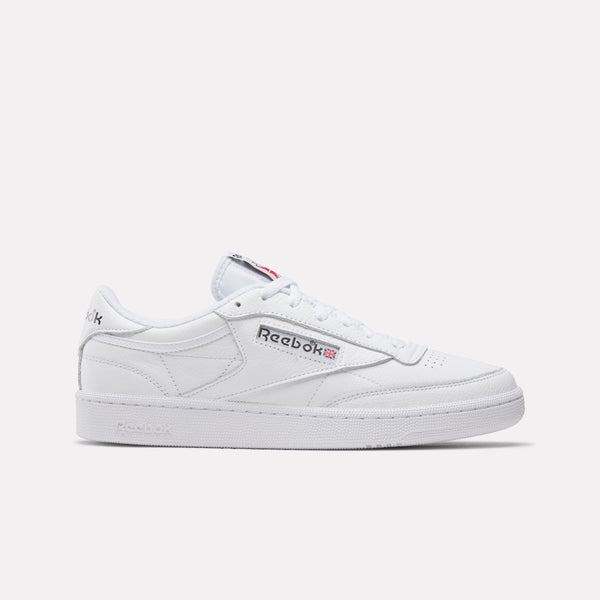
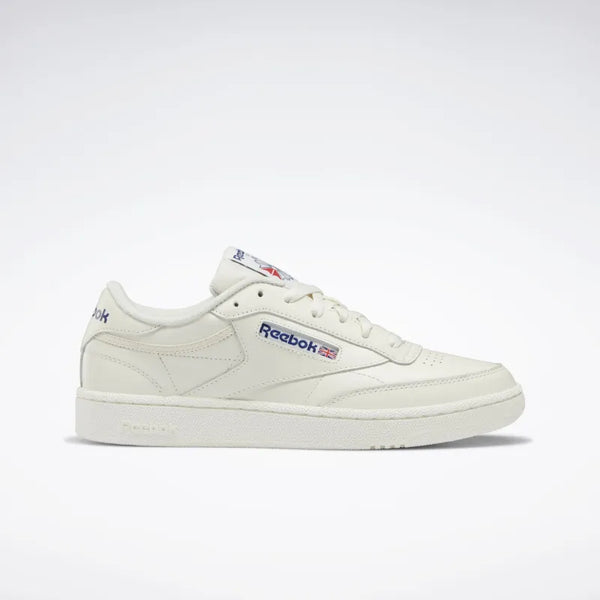
1983 m. Reebok pristatė Classic Leather kaip bėgimo batelį. Skirtingai nuo savo laikmečio, jis išsiskyrė švariu ir minimalistiniu dizainu. Naudojant aukštos kokybės odą, jis išsiskyrė iš kitų to laikotarpio sportinių batelių, skirtų našumui.
Perskaitykite visą straipsnį
 Reebok švenčia naująjį Nano X4 Wodapalooza Majamyje
Reebok Mobile Tech Lab, strategiškai įrengtoje už pagrindinės vietos ribų, dalyviai turėjo galimybę iškeisti savo esamus sportbačius – kurie buvo skirti aukojimui – į naują porą naujausių Reebok Nano X4. Interaktyvi patirtis neapsiribojo renginio teritorija – vietinė pusryčių vieta „Caffe Fiore“ prisijungė prie temos su išskirtiniais „L’Egg Day“ Reebok sumuštiniais.
Perskaitykite visą straipsnį
 ATRASKITE NANO ŠEIMĄ
Atvyko Nano X4
„Nano X4“ sportbačiai pranoksta lūkesčius, leidžiantys juos dėvintiems visada atiduoti geriausią rezultatą kiekvieno treniruotės metu. Sukurti būti lengviausiu ir oriausiu modeliu Nano serijoje, šie treniruočių batai užtikrina optimalų palaikymą ir našumą.
Perskaitykite visą straipsnį
 Camilla Massa ir Reebok
Camilla Massa yra sportininkė, kuri savo sportinę karjerą pradėjo neįprastai. Tapusi jauna mama, ji pajuto norą skirti laiko treniruotėms ne tik tam, kad jaustųsi gerai savo kūne, bet ir siekdama rasti naują pusiausvyrą, kuri nebūtų ta „rami gyvenimo“ būsena, kurią ji pradėjo gyventi.
Perskaitykite visą straipsnį
 ATRASKITE REEBOK CLUB C LTD DIZAINĄ KURTĄ DIZAINERIO EVANO BELFORTI
Beveik keturis dešimtmečius Club C buvo ištvermingo stiliaus simbolis. Iš pradžių tai buvo tenisui įkvėptas batelis, tačiau tapęs gyvenimo būdo ikona, jo kelias liudija gebėjimą pranokti pradinę paskirtį ir įrašyti unikalią istoriją. Paveldimų batų srityje Evanas Belforti – vyresnysis batų dizaineris Reebok LTD, sukūręs Reebok Club C LTD – dažniausiai renkasi istorijas, kurios atsiskleidžia per metų evoliuciją produktų linijoje. Tačiau Club C jį žavi dėl kitos priežasties: jo nepajudinamumo. Nuolat kintančiame pasaulyje Club C rado savo vietą daugybėje aplinkų, sklandžiai pritapdamas tiek aikštelėje, tiek riedlenčių parke, tiek kasdienėje madoje.
Perskaitykite visą straipsnį
 NAUJOJI REEBOK LTD LINIJA
Reebok LTD – Learn. Test. Design. yra platforma, siekianti atskleisti individualų saviraišką ir įkvėpti pažangą, erdvė, kuri atranda praeitį, kad įkvėptų ateitį, kūrybinis procesas, nuolat besivystantis. Ši linija bus prieinama visame pasaulyje ir apims naujus produktus bei patirtis, atitinkančias Reebok misiją perrašyti sporto ir kultūros ribas. Dėmesys skiriamas inovacijoms, kurios atsiskleidžia aukštos kokybės kolekcijose, išskirtinėse bendradarbiavimo programose ir specialiuose projektuose, remiantis Reebok istorija ir amžinais dizainais.
Perskaitykite visą straipsnį